Archives
- 2026-10
- 2026-09
- 2026-08
- 2026-07
- 2026-06
- 2026-05
- 2026-04
- 2026-03
- 2026-02
- 2026-01
- 2025-12
- 2025-11
- 2025-10
- 2025-09
- 2025-04
- 2025-03
- 2025-02
- 2025-01
- 2024-12
- 2024-11
- 2024-10
- 2024-09
- 2024-08
- 2024-07
- 2024-06
- 2024-05
- 2024-04
- 2024-03
- 2024-02
- 2024-01
- 2023-12
- 2023-11
- 2023-10
- 2023-09
- 2023-08
- 2023-07
- 2023-06
- 2023-05
- 2023-04
- 2023-03
- 2023-02
- 2023-01
- 2022-12
- 2022-11
- 2022-10
- 2022-09
- 2022-08
- 2022-07
- 2022-06
- 2022-05
- 2022-04
- 2022-03
- 2022-02
- 2022-01
-
br HER proto oncogene The erbB gene located on the
2022-01-31
HER2 proto-oncogene The erbB2 gene, located on the short arm of chromosome 17, was discovered and cloned in 1983 (Fig. 1) (Sato et al., 1983). The product of this gene, HER2, is a transmembrane glycoprotein of 185 KDa that consists of three main domains: an extracellular, a transmembrane and an i
-
Glutathione in reduced form GSH the tripeptide
2022-01-30
Glutathione in reduced form (GSH, the tripeptide, γ-glutamyl cysteinyl glycine) is a non-enzymatic low-molecular-weight antioxidant necessary for the maintenance of a cellular redox state (Noctor et al., 2012). At the stage of the transition from germination to seedling growth the process of cell di
-
br Materials and methods br Results br Discussion Nervous
2022-01-30
Materials and methods Results Discussion Nervous system disease is an important signal of AIDS deterioration (Rosca et al., 2012, Yilmaz et al., 2012). It is possible that HIV crosses the blood mlck barrier or blood cerebrospinal fluid barrier into the central nervous system freely or via
-
The mechanisms by which NEIL and NEIL excise bulky adducts
2022-01-30
The mechanisms by which NEIL1 and NEIL3 excise bulky adducts and unhook ICLs are unclear. Structures of NEIL1 are available only in complex with DNA containing small lesions 79., 80., 81., and the single available structure of NEIL3 lacks DNA (Figure 5D,E) [73]. Nonetheless, comparison of the two st
-
Our study has some limitations that should be
2022-01-30
Our study has some limitations that should be considered when the results are interpreted. First, we did not measure the protein levels of Bax and Bcl2, due to time and budget limitations. Although simultaneous measurements of both mRNA and protein levels are complementary for a better understanding
-
br The GLI code The GLI code
2022-01-30
The GLI code The GLI code model [21], [22] considers the total GLI function as a balance of positive activator (GLIA) and negative repressive (GLIR) activities with GLI1 being mostly a positive transcription factor and GLI3 mostly a transcriptional repressor. The GLIA:GLIR ratio is thus critical,
-
fura 2 am mg GSIs were shown to effectively decrease A level
2022-01-30

GSIs were shown to effectively decrease Aβ levels at doses close to or higher than their IC50 values in cell culture models. Surprisingly, they also slightly increase Aβ levels at low doses, (significantly below the IC50) also known as “Aβ rise”, due to various mechanisms including inhibition of cel
-
br Introduction Before planning population based genetic ana
2022-01-29
Introduction Before planning population-based genetic analysis or GWAS, it is important to annotate the sequence of the gene because these sequences represent the major sites such as promoter and transcription factor Fidaxomicin which may ultimately affect the expression of the gene. Similarly,
-
In the Joint United Nations
2022-01-29
In 2015, the Joint United Nations Program on HIV/AIDS (UNAIDS) proposed that by 2020, 90% of people living with HIV should be aware of their HIV status, as the first part of 90-90-90 strategy to end AIDS epidemic. Early detection of HIV allows initiating care for proper treatment, which impacts in m
-
The synthetic pathway of the target compounds
2022-01-29
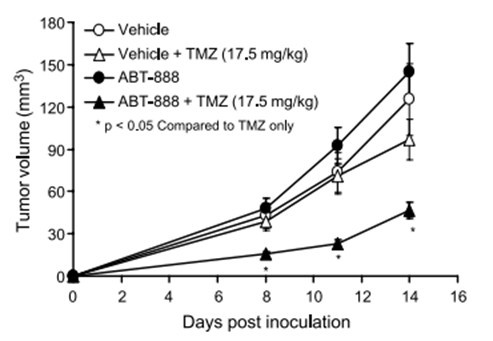
The synthetic pathway of the target compounds , , , and is presented in . The intermediate was synthesized according to a reported method. The intermediate was prepared by mixing UA with an equimolar concentration of KCO, a catalytic amount of KI, and more than two equivalents of 1,2-dibromoethan
-
Interestingly myorelaxation and the stimulation of cGMP
2022-01-29
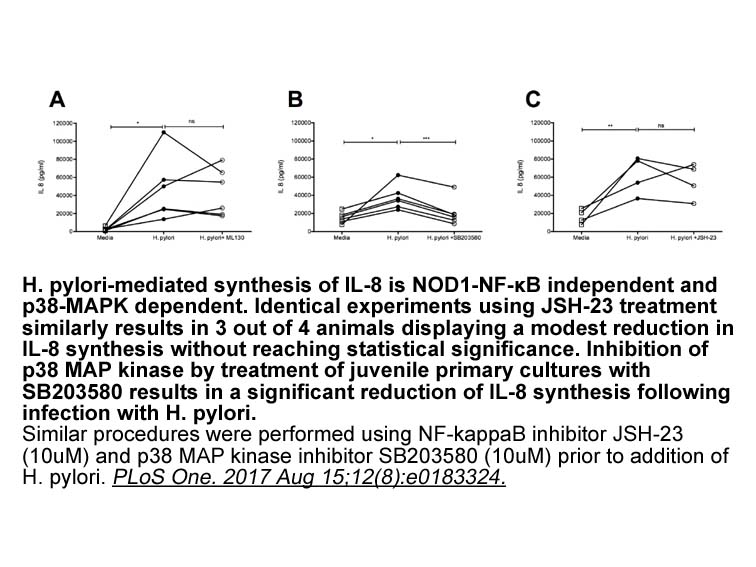
Interestingly, myorelaxation and the stimulation of cGMP production are properties also reported for sGC stimulators, such as YC-1 and BAY 41–2272 (i.e., indazole compounds that were discovered in the 1990s) [35]. They relax aortic ring contractions induced by phenylephrine, and their effects are si
-
br Introduction Nicotinic acid has been used
2022-01-29
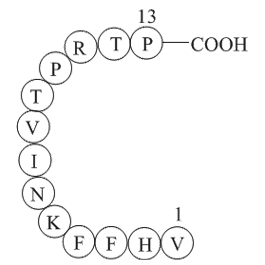
Introduction Nicotinic Carmofur has been used clinically for more than 50 years [1] since it has anti-atherogenic effects, including the ability to reduce triglyceride (TG) and low-density lipoprotein cholesterol (LDL-C), and elevate high-density lipoprotein cholesterol (HDL-C) [2]. Nicotinic ac
-
Rapid action of E on
2022-01-29
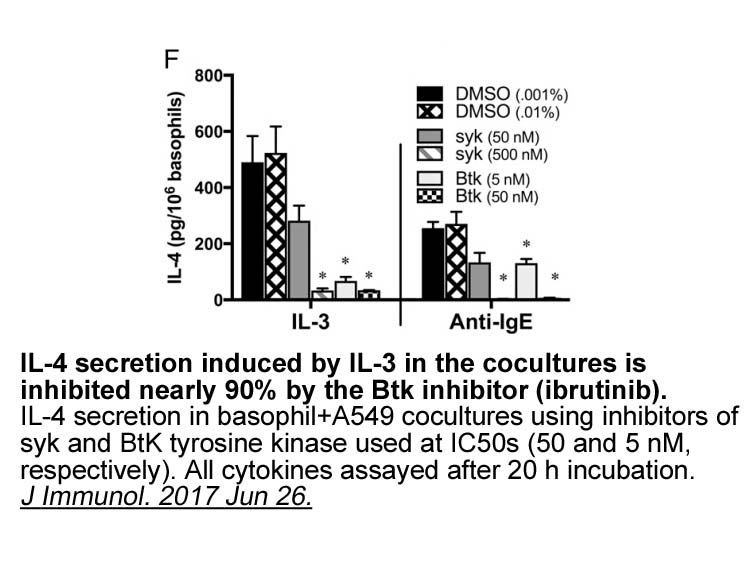
Rapid action of E2 on GnRH neurons has been known for some time. E2 hyperpolarizes guinea pig GnRH neurons, alters cAMP production in GT1-cells and stimulates or inhibits [Ca2+]i oscillations within 15 min (Lagrange et al., 1995; Navarro et al., 2003; Temple et al., 2004; Romanò et al., 2008). Impor
-
nor-NOHA acetate The translation of our rat findings to
2022-01-29
The translation of our rat findings to bovine and human lenses revealed that the expression of glucose transporters was more straightforward in bovine and human than in the rat lens, since only GLUT1 was detected in these lenses. Using the C-terminal GLUT1 antibody, we observed bands for GLUT1 in al
-
Medulloblastoma predominantly occurs in infants and
2022-01-29

Medulloblastoma predominantly occurs in infants and children, and is the most-common type of paediatric malignant Nimodipine mg tumour, accounting for about 20% of all childhood brain tumors [63]. According to cancer genomics, medulloblastoma consists of at least 4 distinct subgroups: Hh driven, Wn
8522 records 552/569 page Previous Next First page 上5页 551552553554555 下5页 Last page